Summing UP
Summing UP features the latest porphyria research in easy-to-understand summaries that have been reviewed and approved by the UPA's Scientific Advisory Board of porphyria experts.
The Summing UP Library
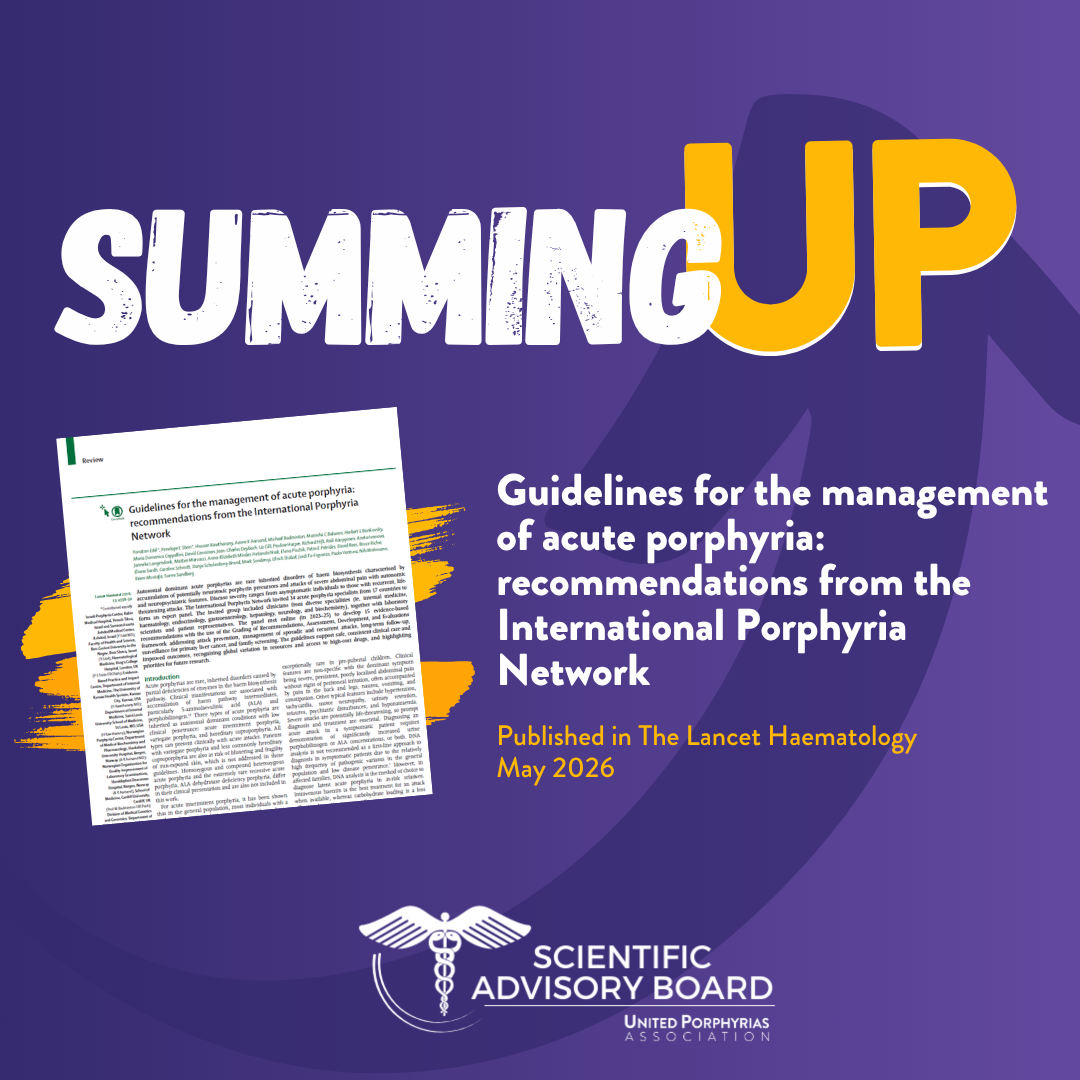
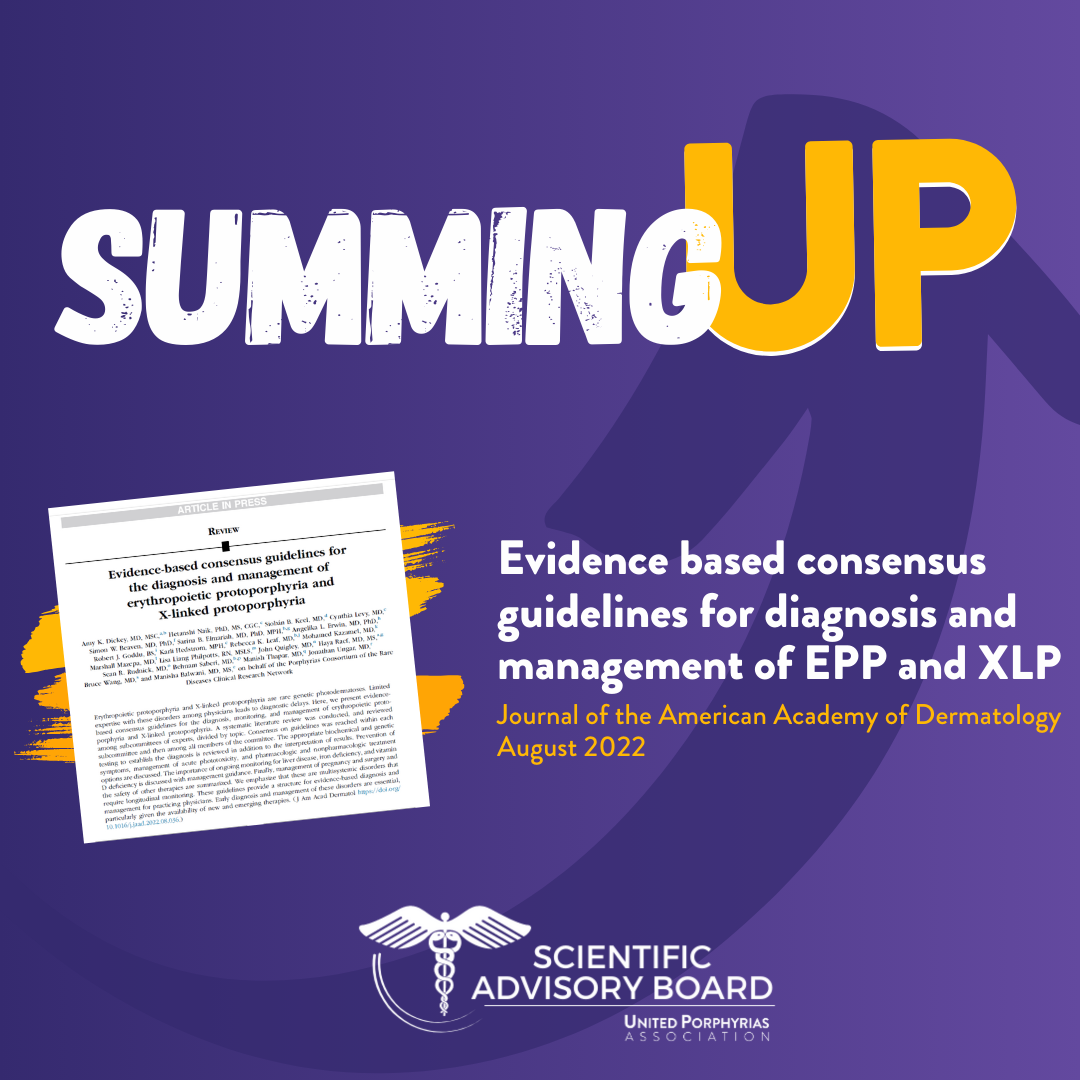
These guidelines are the result of an international effort by porphyria experts to evaluate the existing research and evidence about the management of acute porphyrias (specifically AIP, HCP and VP), and develop recommendations to support safe and consistent care across the world.
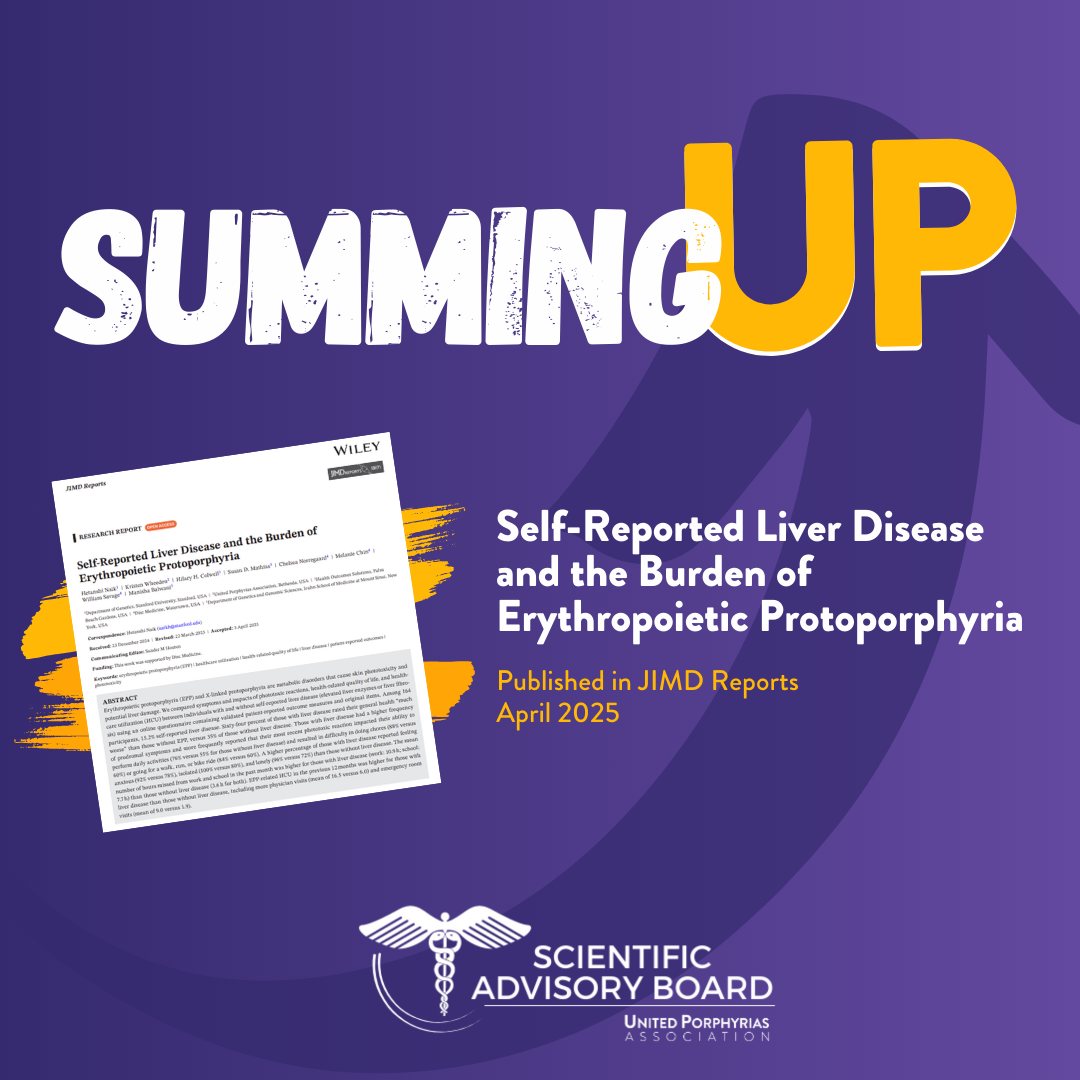
This study asked adolescents and adults with erythropoietic protoporphyria (EPP) or X-linked protoporphyria (XLP) how sunlight affects their skin, daily life, emotions, school and work, and healthcare use. The goal was to put numbers to what many already live every day.
This research looked at close relatives of people with acute hepatic porphyria (AHP). The relatives had never been tested or had symptoms of porphyria, but the study found that more than half of them had the gene for porphyria and a significant number had elevated levels of urine PBG and ALA.
This study involved focus groups with porphyria patients to explore the emotional and psychological challenges they face. Participants discussed their lived experiences, shared coping strategies, and offered recommendations for additional support to improve their quality of life.
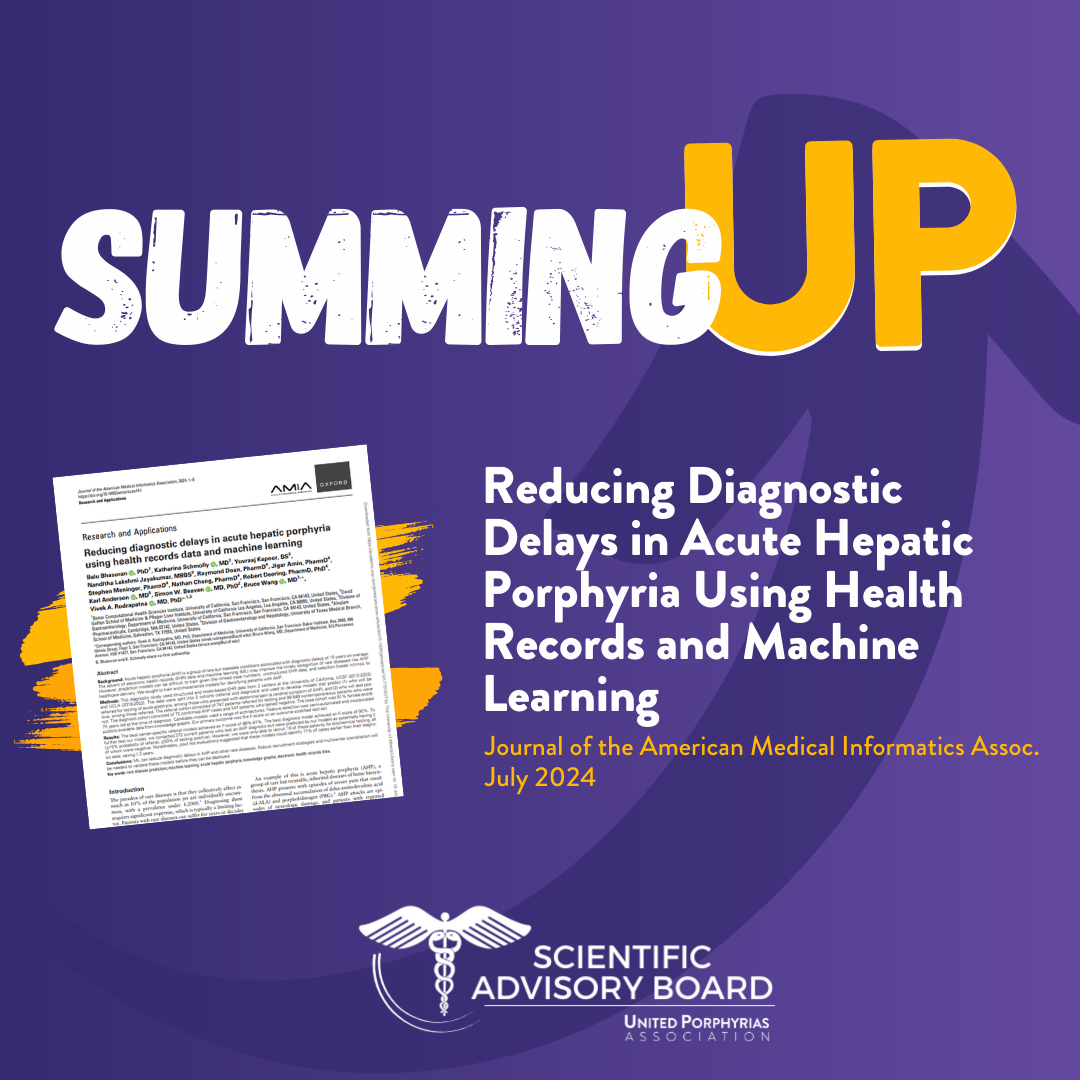
People with symptomatic acute hepatic porphyria (AHP- includes AIP, VP and HCP) often wait about 15 years to get diagnosed, which is too long. This research used information from electronic health records (EHR) and machine learning (ML) to see if they could find people with AHP faster.
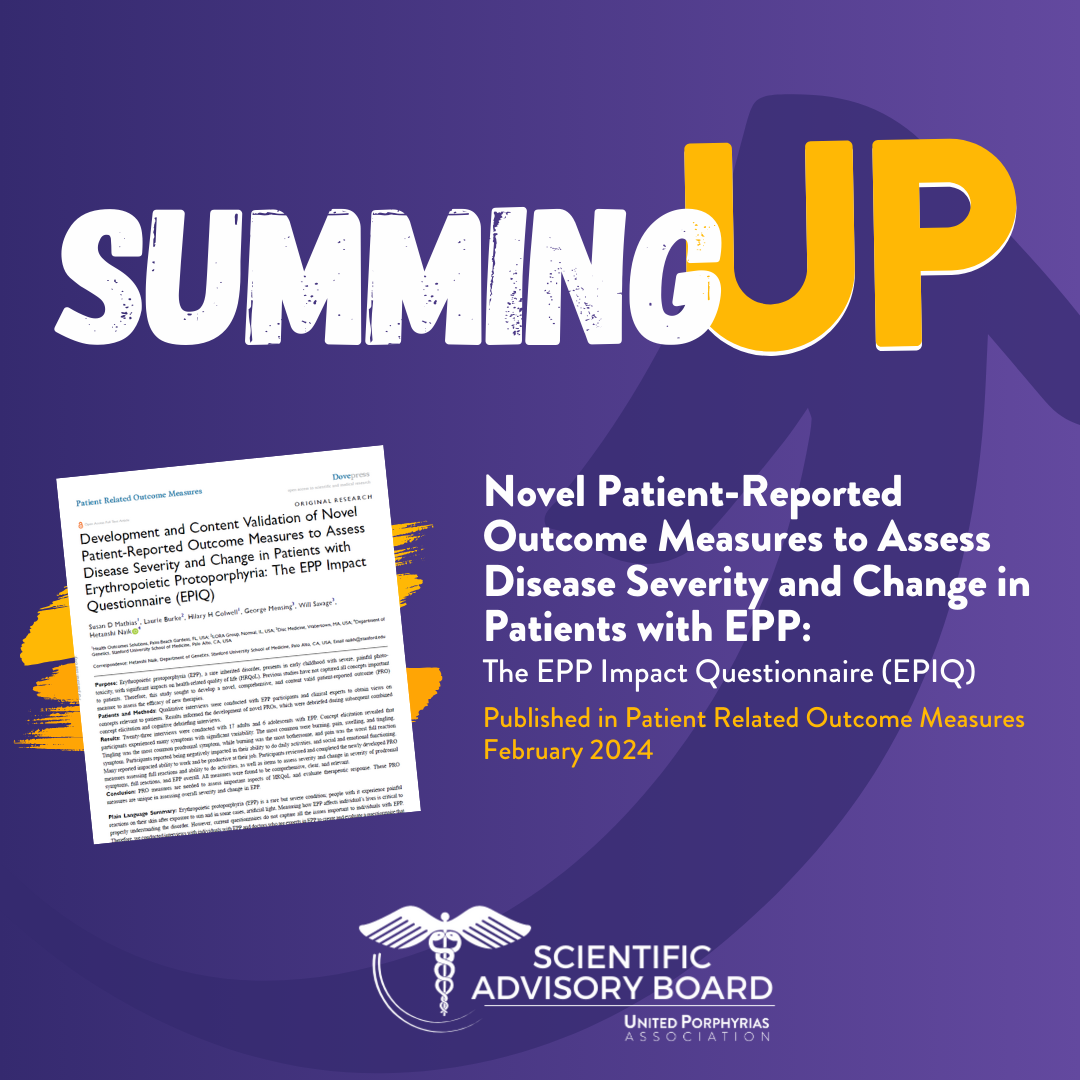
Having a standardized questionnaire tool is important to evaluate and demonstrate the effectiveness and impact of new treatments for EPP. Regulators like the FDA consider improvements in quality of life, along with other factors, when deciding whether to approve new treatments.
This research developed a questionnaire called the EPP Impact Questionnaire or EPIQ.
Up to this point, most research that has been published about AHP has focused on symptoms and care during an acute attack. This research looks at the full burden of acute hepatic porphyrias (AHP, includes AIP, HCP and VP) on patients from around the world.
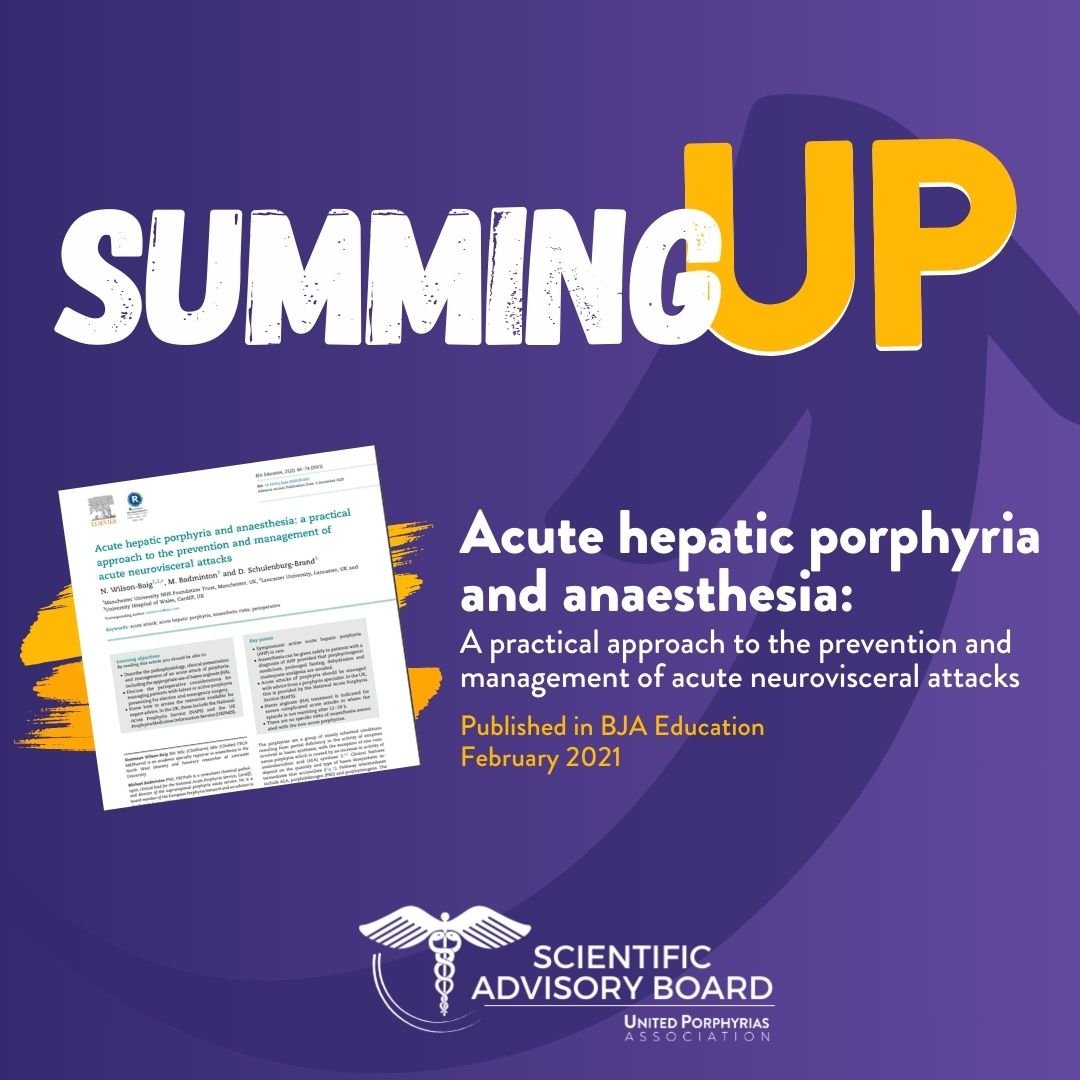
Surgery and the use on anesthesia require special considerations for patients with acute hepatic porphyrias (AHP- includes AIP, VP and HCP). This article provides an overview* of precautions for the period before, during and after an operation (the ”perioperative period”) for patients with AHP.
This research describes some important features of EPP including prodromal (warning) symptoms, a priming effect from previous light exposure, and lack of visible symptoms among many patients.