Meet Sabaritha, AIP warrior
"When I finally regained consciousness, I woke up in a hospital bed barely able to move."
-Sabaritha, AIP patient.
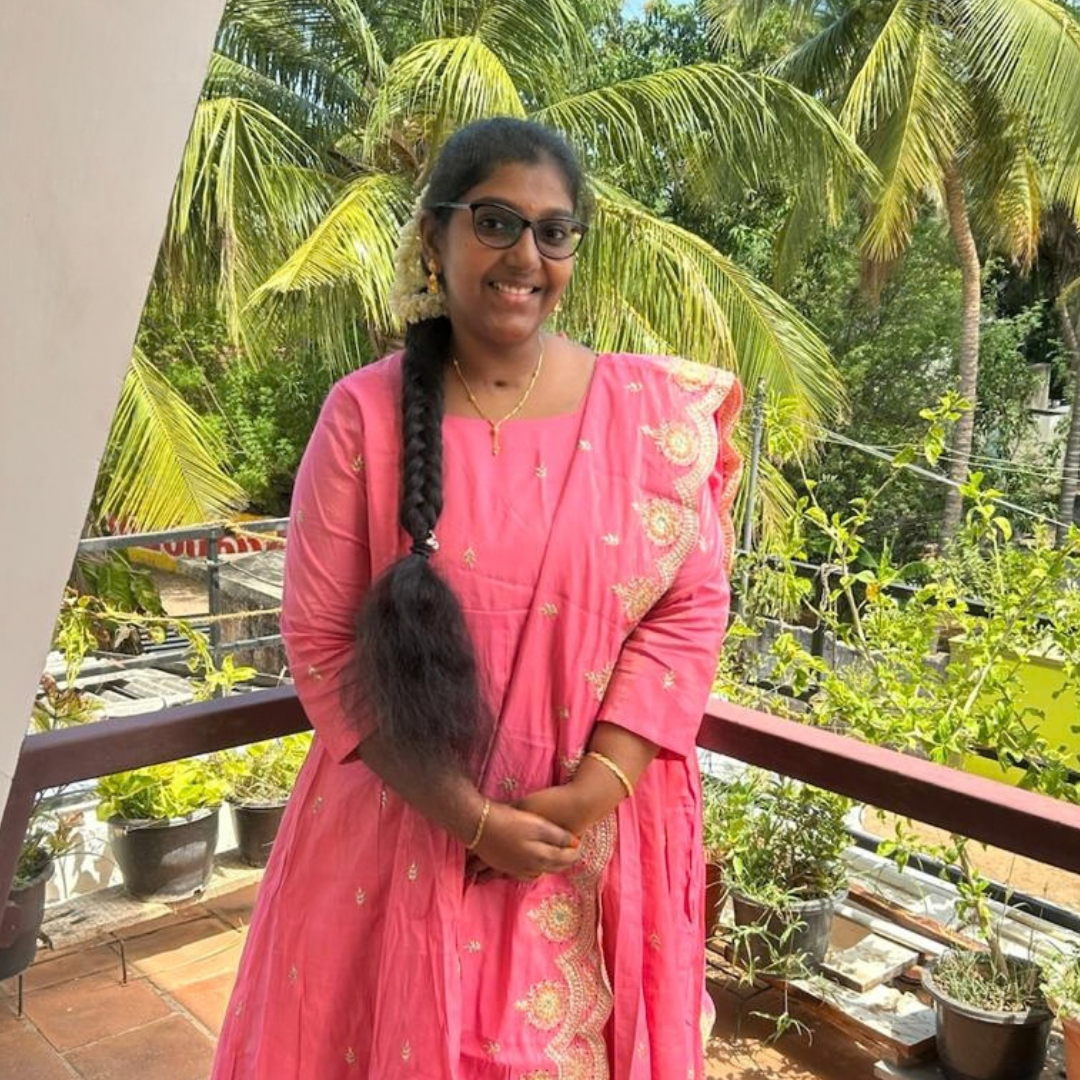
Hi, I’m Sabaritha Nagendran. I’m 32 years old and from Kayamozhi, Tamil Nadu, India.
Growing up, dance was my whole world. I started classical dance when I was four years old while we were living in Sharjah, UAE. My mother was a dancer, and she was the one who introduced me to it. From then on, my weekends revolved around classes, performances, and practice. At school, I was known as “the girl who could dance” or “the girl with long hair.”
Everything changed when I was 14.
At the time, we were living in Cairo, Egypt. I had been preparing with my friends for our school’s International Day celebration. We performed together and, although I don’t remember much of that day now, I was told that we won first prize.
That night, I had my first porphyria attack.
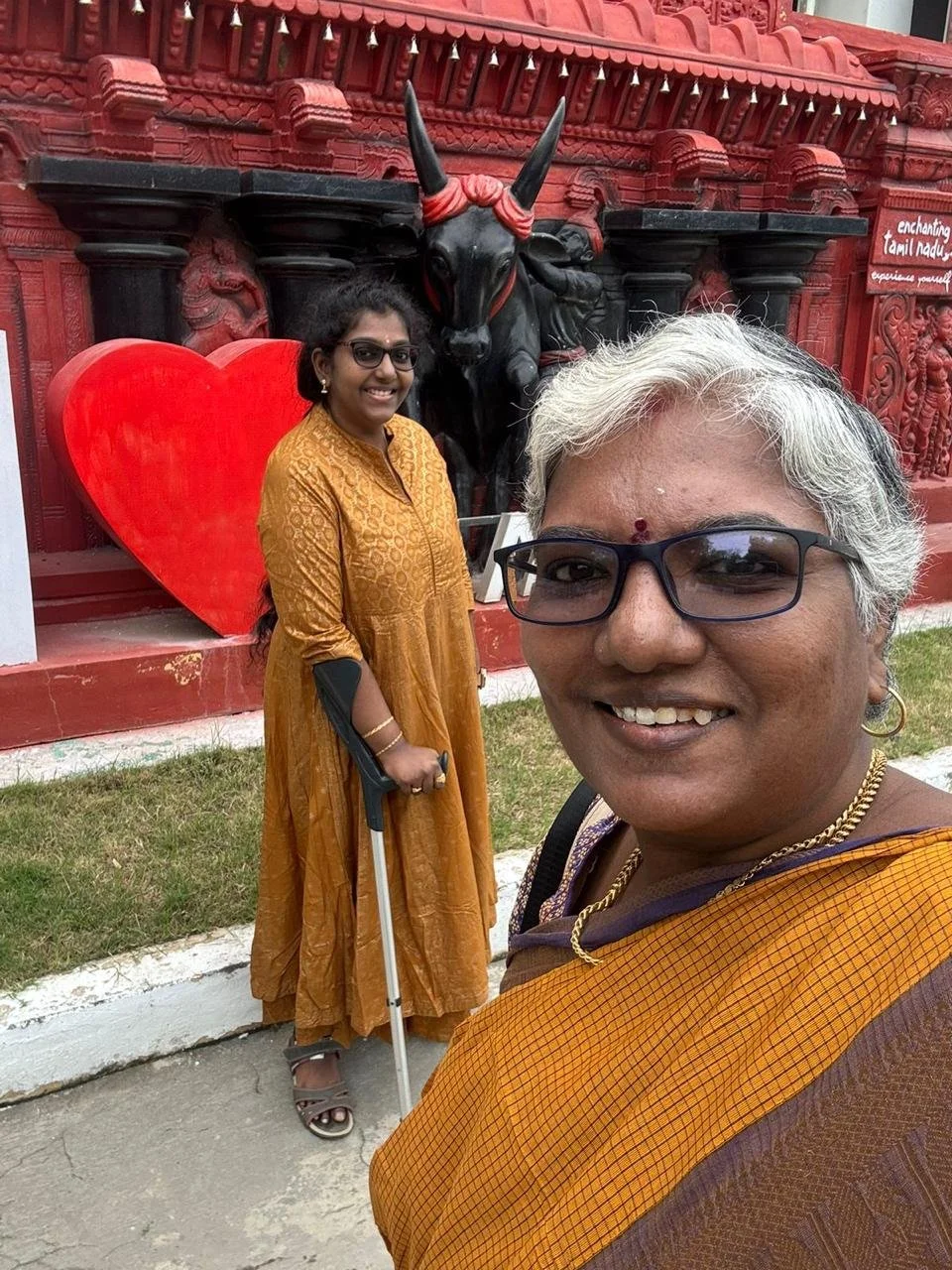
Sabaritha with her mother.
My health deteriorated quickly. I suffered seizures, vomiting, and severe stomach pain before eventually losing consciousness. Doctors struggled to understand what was happening. They suspected brain fever, viral illnesses, and several other conditions. Whenever they tried a new medication, I would react with another seizure.
I spent nearly seven months in the hospital.
During that time, I gradually became paralyzed. My mom tells me it started in my foot and slowly moved upward through my body until only my eyes could blink. Eventually, even that stopped.
When I finally regained consciousness, I woke up in a hospital bed barely able to move. My parents were there, but they couldn’t really explain what had happened because they didn’t know themselves.
Recovery was grueling.
I needed physical therapy, speech therapy, and breathing therapy. For a period of time, I couldn’t breathe on my own and needed a breathing machine, which left a scar on my neck that I still have today.
Something as simple as sitting up was difficult. Walking felt impossible.
Before getting sick, I had been a dancer for nearly ten years. I was used to controlling every movement and every muscle in my body. Suddenly, I had to learn how to use my body all over again.
My mom says dance was one of the things that kept me going. Even while I was unconscious, she would show me mudras, the hand gestures used in classical dance, and talk to me about dancing. Apparently, I would sometimes respond to them. I don’t remember it, but I like knowing that dance was still somewhere inside me.
My hair was another connection to who I had been before getting sick. Doctors suggested cutting it because it was difficult to manage during such a long hospital stay. But my mom knew how much it meant to me. She and some of the nurses patiently untangled, washed, and cared for it. After everything I had lost, waking up and seeing that my hair was still there meant more than I can explain.
More than anything, I wanted to go back to school.
That goal gave me something to work toward every day.
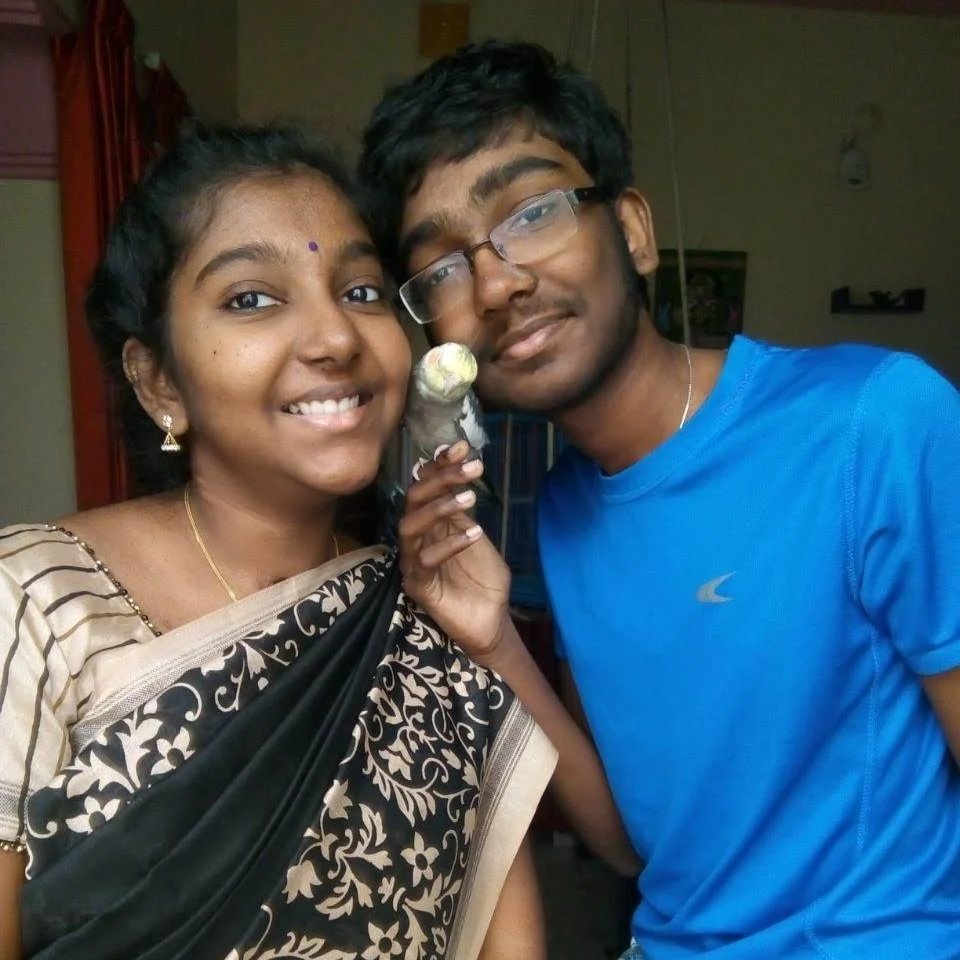
Sabaritha with her brother.
My parents were beside me through everything. They practically lived at the hospital, taking shifts so someone could almost always be with me. My mom would spend the day at the hospital, while my dad often stayed with me overnight, sleeping half-awake on a single chair because there wasn’t even a bed for him. In the morning, he would go home, get ready, and head straight to work. My younger brother was only seven or eight years old and went through the experience alongside them. Looking back, I realize my recovery wasn’t only mine. My entire family went through it with me.
Eventually, I became strong enough to use a wheelchair, and my parents took me back to visit my school.
The building wasn’t designed for wheelchairs. There were three floors, narrow staircases, and classrooms and labs throughout the building. While everyone discussed how I would manage, one of my friends asked me a question:
“You look good, but how are you going to manage school? How are you going to go up to your classes?”
At first, it hurt.
It reminded me of everything I couldn’t do.
But later, that question became exactly what I needed.
If I couldn’t walk, how would I get to class? If I couldn’t climb the stairs, how would I continue school? If I let fear control me, how would I ever return to the life I wanted?
So I worked even harder.
But we still needed to understand why this had happened to me.
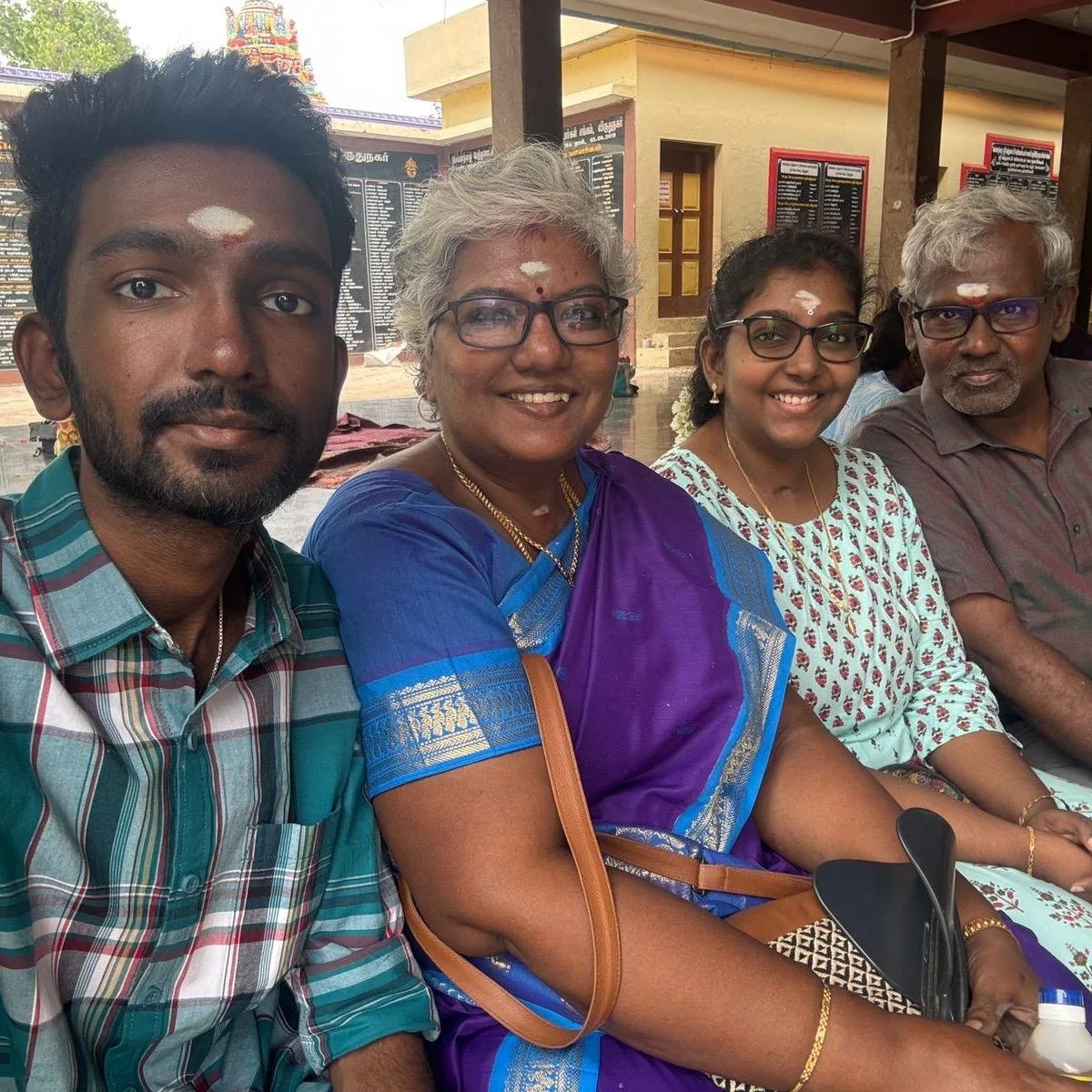
Sabaritha and her family.
We returned to India and went to CMC Vellore, where I underwent more testing. After months of uncertainty, we finally had an answer:
Acute Intermittent Porphyria (AIP).
The diagnosis was frightening, but it was also a relief. For months, everything had been a question mark. Now we finally knew what we were dealing with.
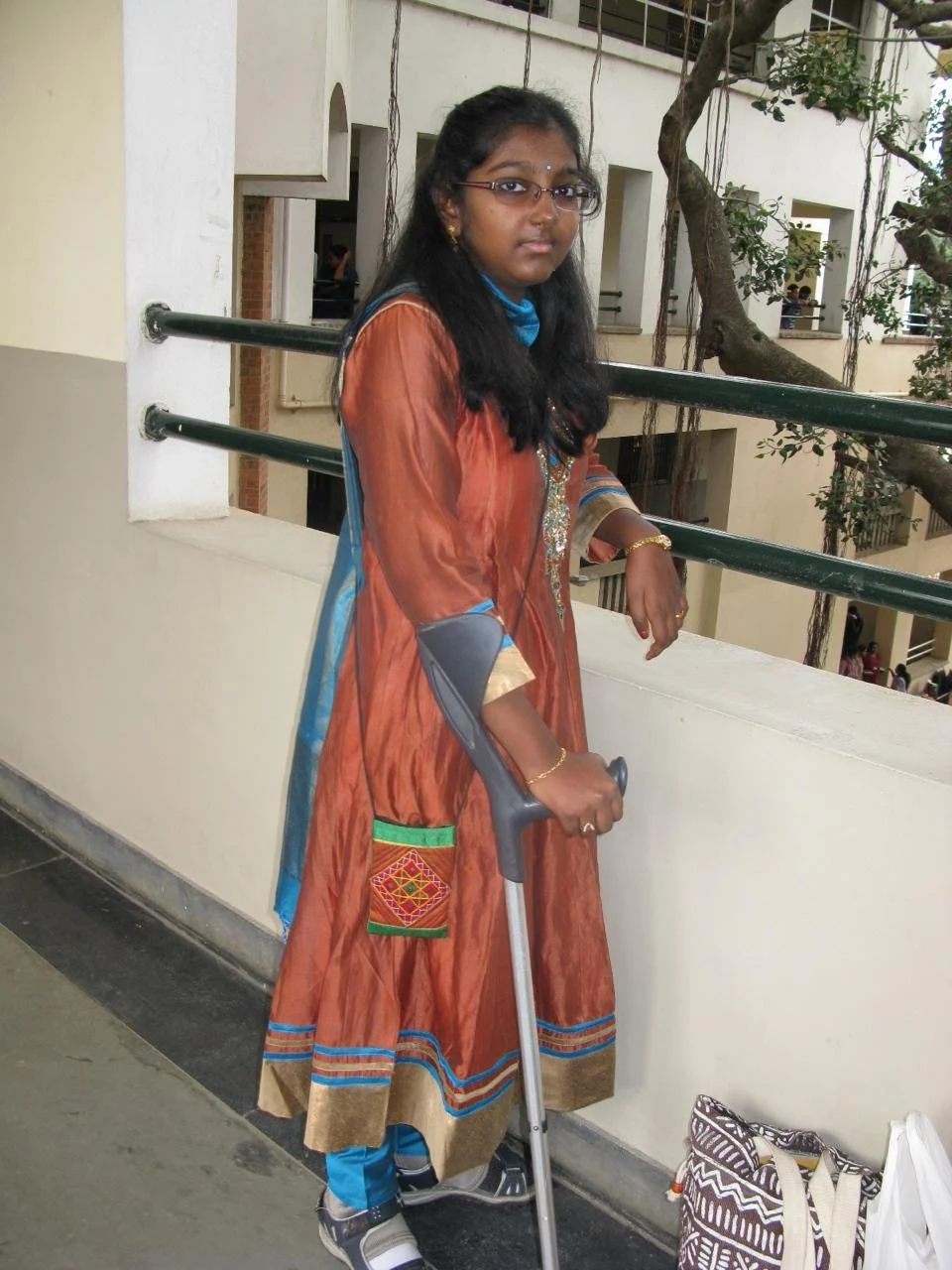
Doctors identified weakness in my foot and arms and emphasized the importance of physiotherapy. I was fitted with a foot brace, which I still use today, to support my foot and prevent my foot drop from getting worse. They also gave my parents a list of medications that were safe and unsafe for me. My mom carried that list everywhere.
The doctors didn’t just help me physically. They also helped my parents understand how to support me emotionally.
They told them, “Be her friends. Be someone she can confide in. Don’t show her your struggles. Smile in front of her, because she will see the world through your expressions.”
My parents took that advice to heart. No matter how tired they were, how worried they felt, or how much they were struggling behind the scenes, they always came to me with a smile.
That gave me strength.
Slowly, I progressed from a wheelchair to crutches.
A year after I became sick, I finally returned to school.
My friends became an important part of my recovery. They carried my books when I needed to climb stairs, helped me with notes when I couldn’t write quickly enough, and encouraged me to participate in sports and activities. They never made me feel like “the sick girl.”
Once, I fell on the school grounds and immediately panicked because I didn’t know how I would get back up. One of my friends ran over and simply said, “Don’t panic, I’ll help you.”
She got me back on my feet.
It may sound like a small moment, but it meant everything. She never made me feel like a burden. She is still one of my best friends today.
“The diagnosis was frightening, but it was also a relief. For months, everything had been a question mark. Now we finally knew what we were dealing with.”
In 2011, political unrest in Egypt forced my family to return to India. Starting over in Bangalore was difficult. The sudden move and stress affected my health, and I experienced seizures again.
Life in India also brought new challenges. People constantly asked what was wrong with me, whether it was genetic, or suggested doctors, temples, and treatments. As a teenager, I didn’t know how to respond.
Emotionally, I was struggling too.
There were nights when I cried to my parents and asked, “Why did you save me? Why is it only me? What did I do wrong? I’m a burden to the family.”
Even when I appeared okay on the outside, I carried guilt, fear, and the feeling that I was missing out on life.
Still, I kept moving forward.
I did well academically and eventually began a BSc in Physics, Electronics, and Maths. College became a turning point. The people there didn’t know the “old me,” which gave me the freedom to discover who I was beyond dance and beyond my illness.
I made friends, found new strengths, and began enjoying life again.
My mom continued to play an enormous role in keeping me healthy. She carefully prepared food for me and somehow developed an incredible ability to notice when something wasn’t right just by looking at my posture, eyes, or expression.
By the time I graduated in 2016, I had rediscovered another part of myself too: dance.
At our graduation party, my friends encouraged me to join them on the dance floor. My family was there, my brother joined in, and for a moment all the struggles disappeared.
I was dancing again.
I later continued my studies with an MSc in Physics. When COVID came, I chose not to complete some exams because the risk to my health was too high. It was difficult, but I learned that protecting my health sometimes had to come before everything else.
I also entered the professional world, joining an ed-tech startup in 2019. Going to an office alone for the first time was a huge milestone. Later, in 2022, I joined HappierMe, where my work also became part of a journey of understanding myself better, especially the guilt, fear, and trauma I had carried for years.
My faith has been another important source of strength. On difficult days, I talk to God about things I can’t always share with my parents. I cry, complain, and sometimes ask, “Why me?” But eventually, I remind myself that it is a bad day, not the end of my story, and I find my way back to gratitude.
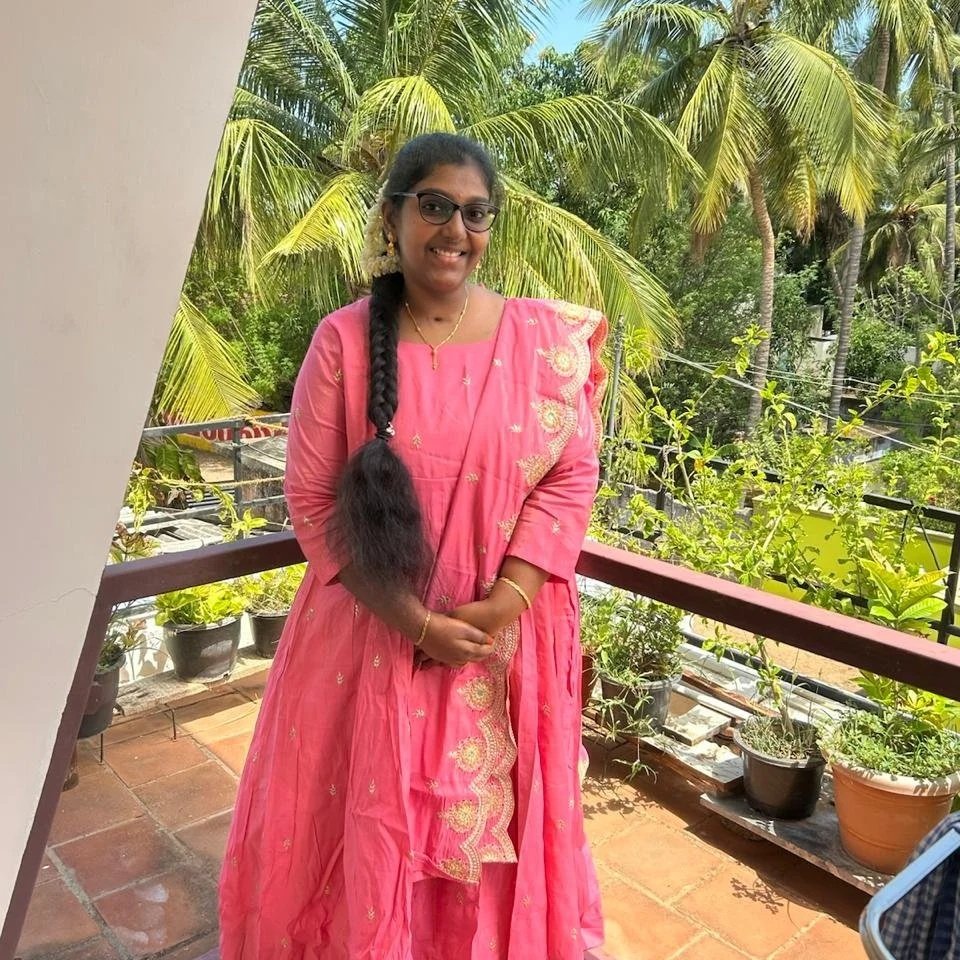
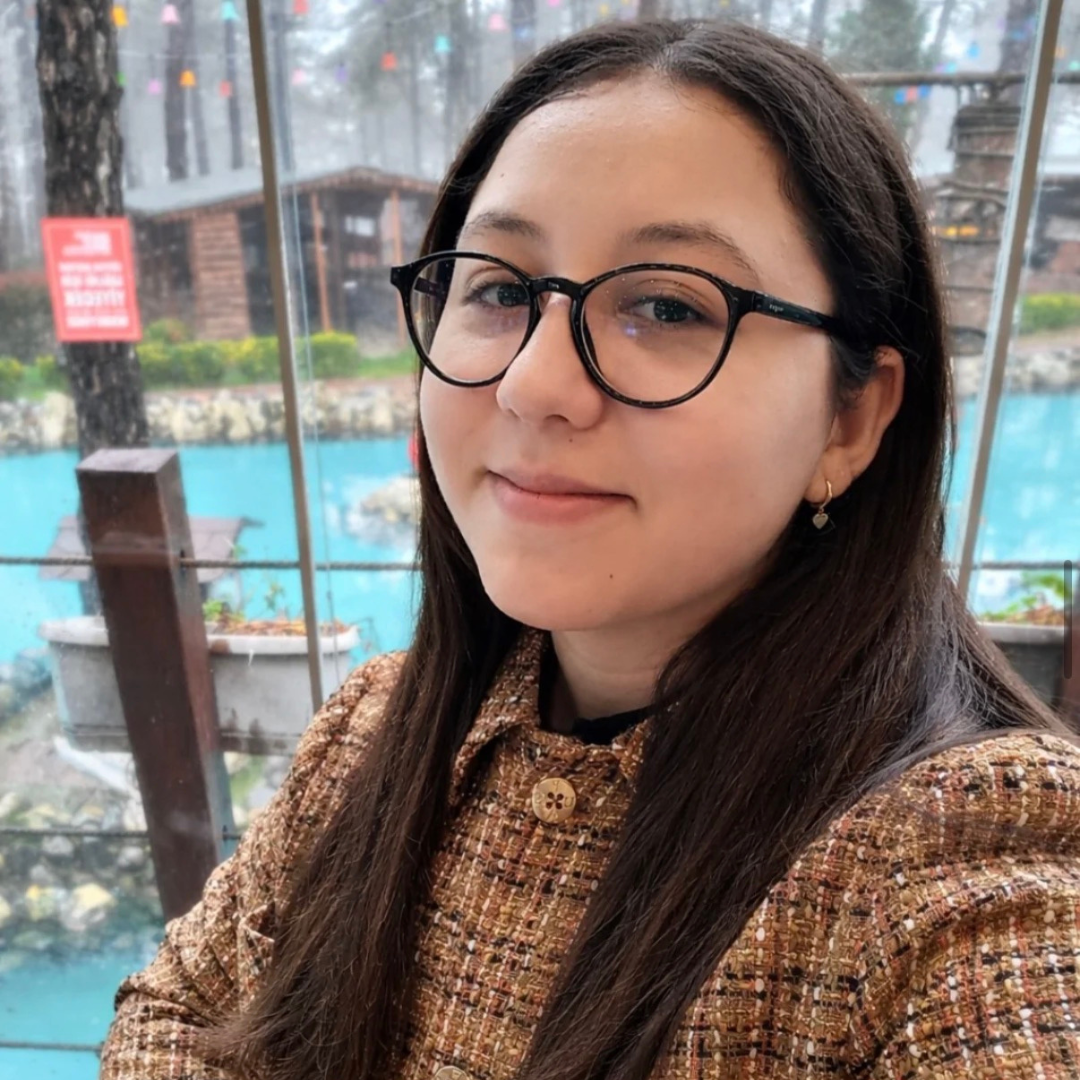
Sabaritha.
Some parts of the journey are still difficult.
Hospitals remain one of my greatest fears. Even blood tests can bring back memories of those months when I was critically ill. Finding doctors who truly understand porphyria has also been a constant challenge.
More recently, I have dealt with hormonal and thyroid issues and two years without a menstrual cycle before it unexpectedly returned. There are still questions we don’t have answers to.
In some ways, I think my family remembers the worst parts of my illness more clearly than I do. I was unconscious for much of it. My parents and brother remember everything.
Sometimes I think they suffered even more than I did.
Today, I understand that living with porphyria is a long journey.
Acceptance does not mean giving up. It means finding balance.
There are things I cannot do and freedoms I have had to give up, but I have learned to celebrate what I can do. Completing a course, enjoying a meal, dancing with friends, working, or simply having a good day… those small victories matter.
In India, porphyria is still not widely known. Treatment can be extremely expensive, and finding a doctor who truly understands the condition is difficult. Because of that, I make sure to earn and keep money aside as a “just-in-case” health fund. For someone living with a rare disease, planning financially for the next medical emergency is not a choice. It is a necessity.
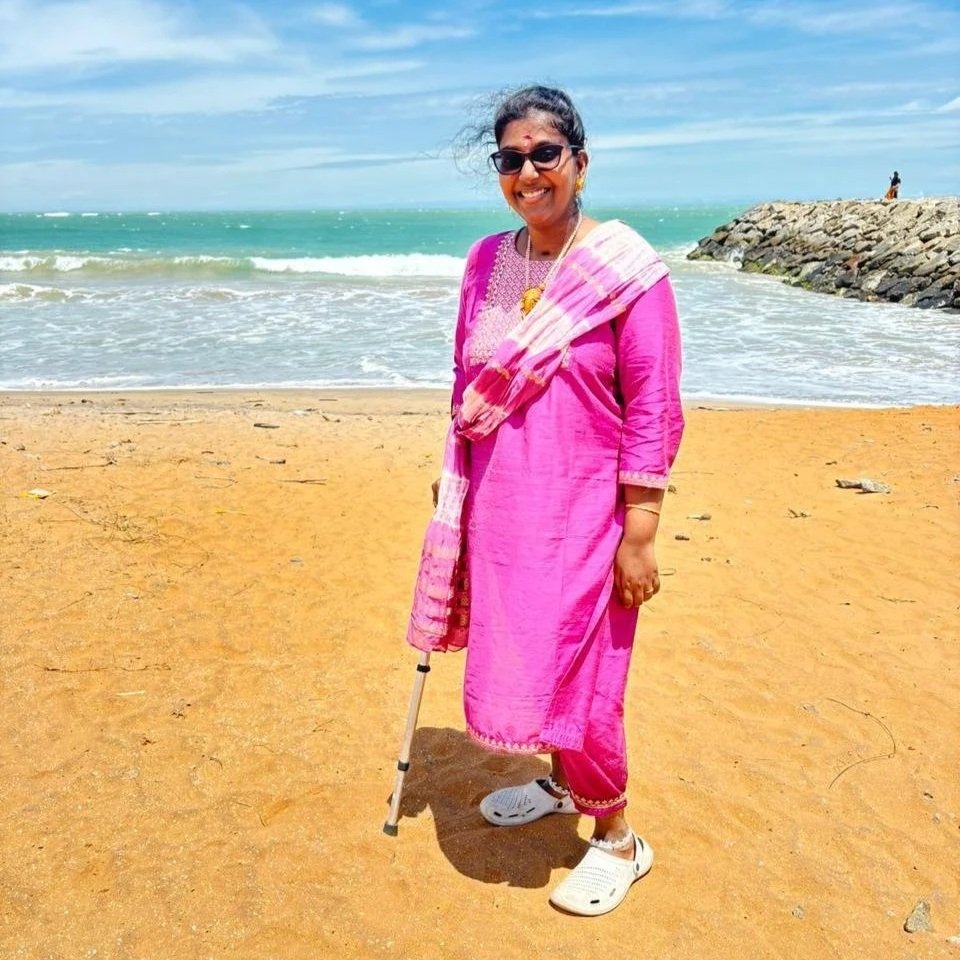
Sabaritha at the beach.
My journey is not defined only by what I have lost.
It is also defined by my family, the friends who helped me back onto my feet, my faith, the lessons I have learned, and the person I have become.
The future still has uncertainties, but I face it with courage, gratitude, and hope.
Sabaritha’s story with AIP.
Want to share your story? Contact us at katri@porphyria.org
Meet others living with porphyria