Her Final Year: What Love Looked Like When We Didn’t Have Answers

Porphyria Voices shares experiences, insights, and advice from the porphyria community. Discover valuable knowledge, foster connections, and join us in raising awareness to empower and unite our porphyria family.
By Heather Doyle
There’s a version of this story where everything makes sense in the end.
Where the right diagnosis comes, the right treatment follows, and the suffering has a clear explanation. This isn’t that story.
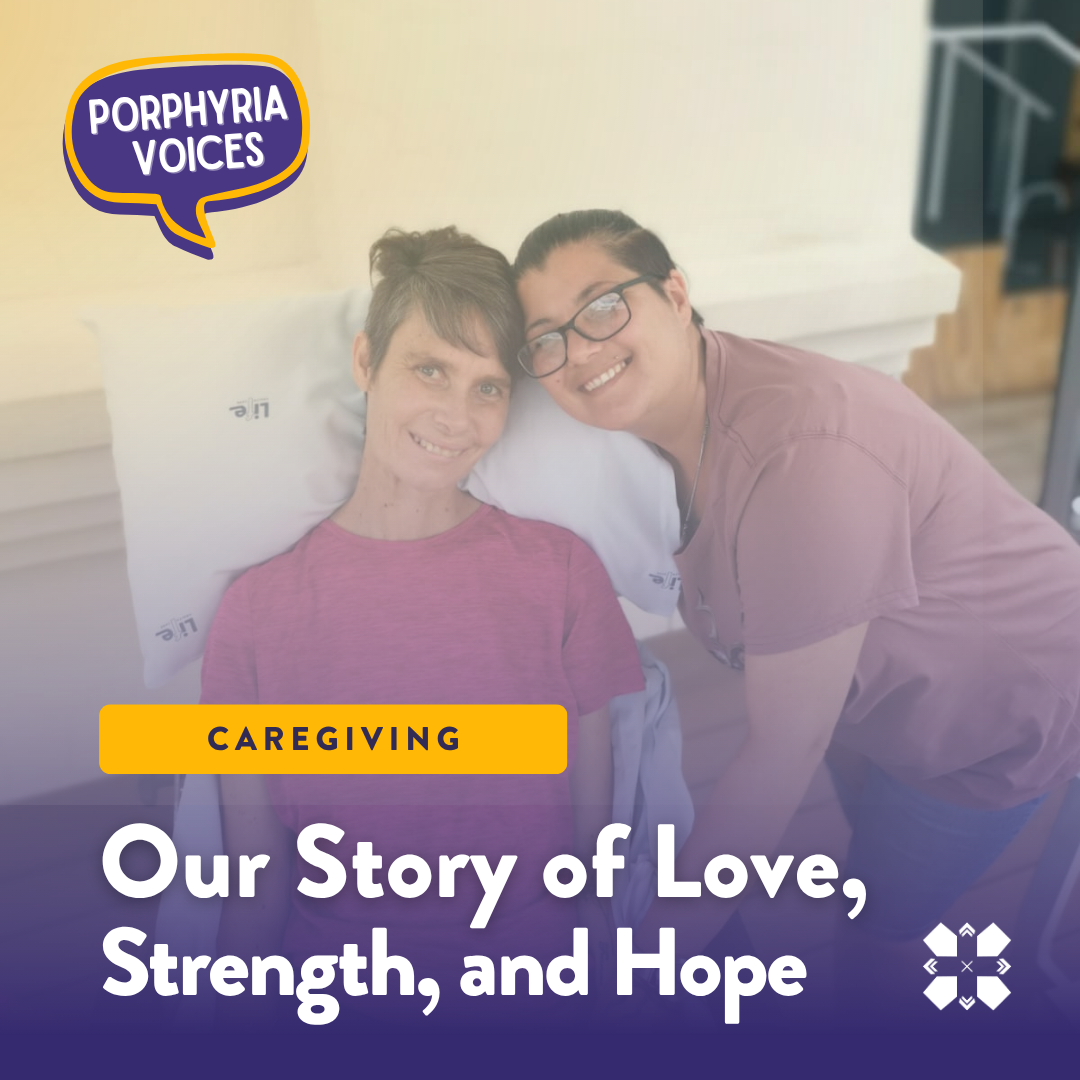
My mom was sick for years, but 2020 was different.
That was the year everything accelerated—physically, emotionally, spiritually. It felt like we were living in constant motion: hospital stays, new symptoms, canceled procedures, small moments of hope followed by huge setbacks.
“Some days felt impossibly heavy. I remember writing in my journal near the end of that year, ‘Most days I feel like my heart is going to burst.’”
-Heather, Caregiver
I was her caregiver, while also raising two young kids in the middle of a pandemic, homeschooling because the schools were closed. Some days felt impossibly heavy. I remember writing in my journal near the end of that year, “Most days I feel like my heart is going to burst.” And that was it exactly. This strange coexistence of deep gratitude and overwhelming grief.
She was diagnosed with Addisons Disease in 2008, but what happened in 2020 was not what we were used to with Addisons Disease. We searched vigilantly for help and for answers. But we didn’t have clear answers.
At one point, the word porphyria was mentioned after it came up as a possibility in a skin biopsy. It gave us a thread to hold onto, but not enough time or clarity to change the course of what was happening. Her rheumatologist did the first set of urine and blood tests. From there, she was referred to a local hematologist who did not understand porphyria. From that point, the doctor referred her to someone at Emory who had more experience and a very long waitlist.
And yet, what I remember most is not just the struggle. It’s what we did inside it.
We Made Moments Anyway
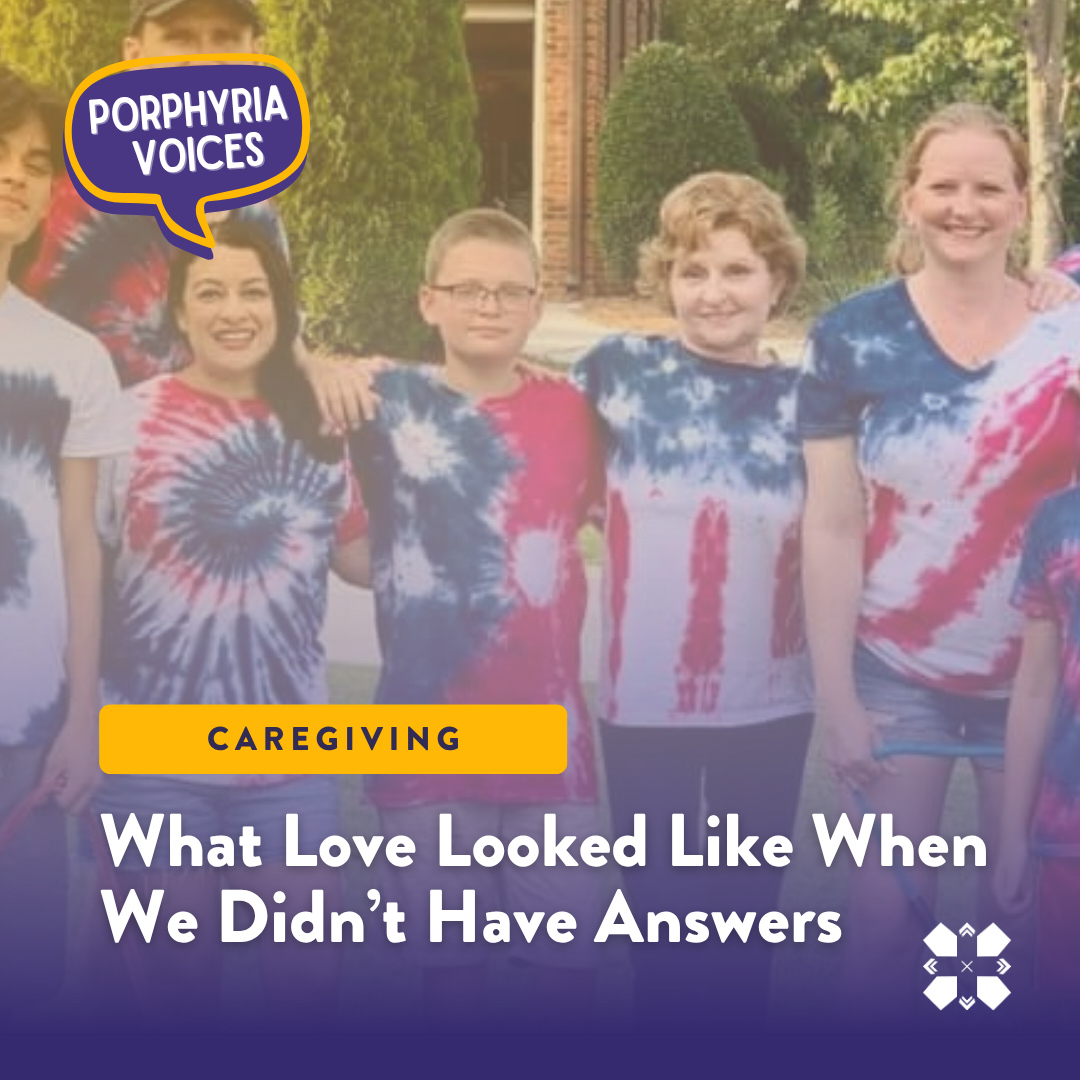
That summer, my brother and his family came in from Texas, and a close friend joined us. One afternoon, we spread everything out—shirts, dye, rubber bands, kids, laughter, dogs barking—and made red, white, and blue tie-dye together. It was messy, chaotic, and completely imperfect.
On the Fourth of July, we all wore those shirts and took family pictures. Looking back, those photos hold more than I realized at the time. They captured something we were all trying to do without saying it out loud—hold onto joy, even as things were slipping.
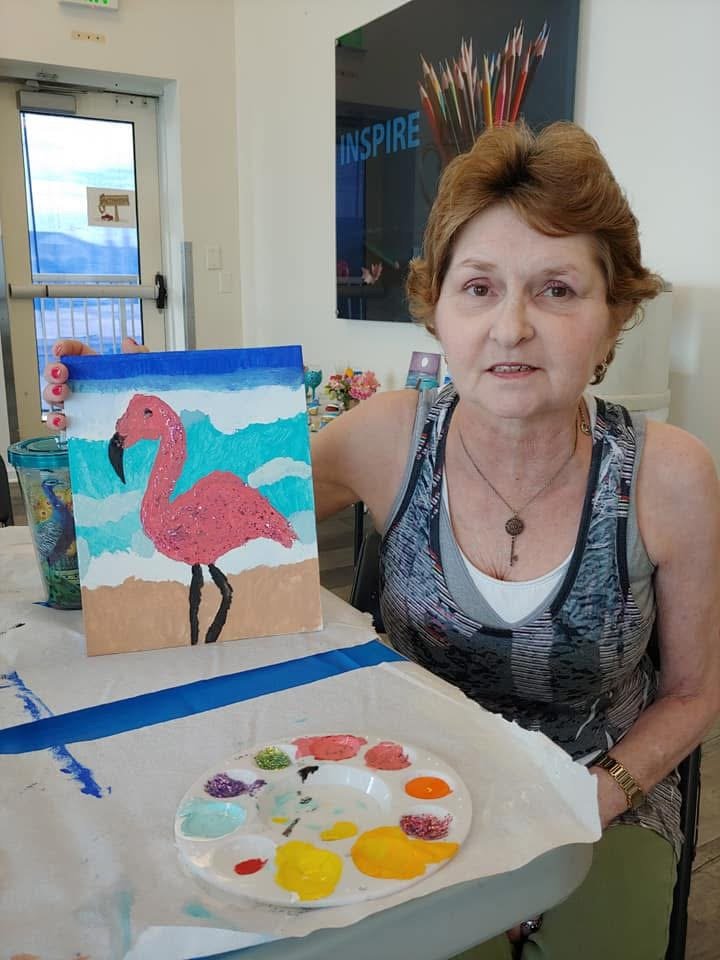
Another day, we painted flamingos on small canvases.
Flamingos thrive in harsh, almost unlivable environments—salt flats, alkaline lakes—places most creatures couldn’t survive. And yet, they stand there with this strange, quiet grace. That stayed with me.
By then, we had begun to understand that this was my mom’s new normal. We weren’t fixing it. We were learning how to sit with it—with her—as she grieved the life she used to have, while still choosing presence, humor, and even beauty where we could find it.
“It has also taught our children incredible kindness and compassion. They have learned how to help others by watching how they love and care for their dad.”
When the Goal Changed
After what felt like her 40th hospital stay that year, something shifted.
She said, very clearly,
“I don’t want to go to the hospital anymore. I want to see the beach… and I want to see my family in Louisiana.” “One last time,” she said.
That was the moment the goal changed. It was no longer about chasing the next treatment or the next answer. It was about honoring what mattered to her. Hospice came in, and instead of limiting us, they encouraged us: Go. Take the trips. So we did.
We packed up two kids, a pet bunny and its cage, a wheelchair, and everything else that came with our version of organized chaos—and we went to the beach. She sat on a balcony overlooking the ocean, listening, watching, taking it in, even on the days she didn’t have the strength to go down.
A couple of weeks later, we made the trip to Louisiana. We rented an old farmhouse and invited family to come and go throughout the week. It wasn’t formal. No announcements. No structure. But in many ways, it was a living, breathing goodbye.
There were hugs, stories, laughter, kids running outside, catching frogs and lizards. There were quiet moments too—days she stayed in bed, surrounded by people who loved her. Days when her best friend or sister would help with the chores that had become too hard for her and were destroying my back. Lifting her, changing her, showers, dressing.
It was beautiful. And it was heartbreaking. And it was exactly what she asked for.
What I Know Now
Two weeks after that trip, she passed away. Sometime later, we got a call from the hematology specialist. She had finally made it to the top of the waiting list. But by then, she was already gone.
For a long time, I wrestled with that. The timing. The questions. The what ifs.
And honestly, I still don’t fully understand why 2020 unfolded the way it did.
But here’s what I do know:
We loved her well. Not perfectly. Not with all the answers. But with presence. With creativity. With stubborn moments of joy in the middle of something we couldn’t fix.
We learned that caregiving isn’t always about solving the problem. Sometimes it’s about sitting in the unknown… and choosing connection anyway.
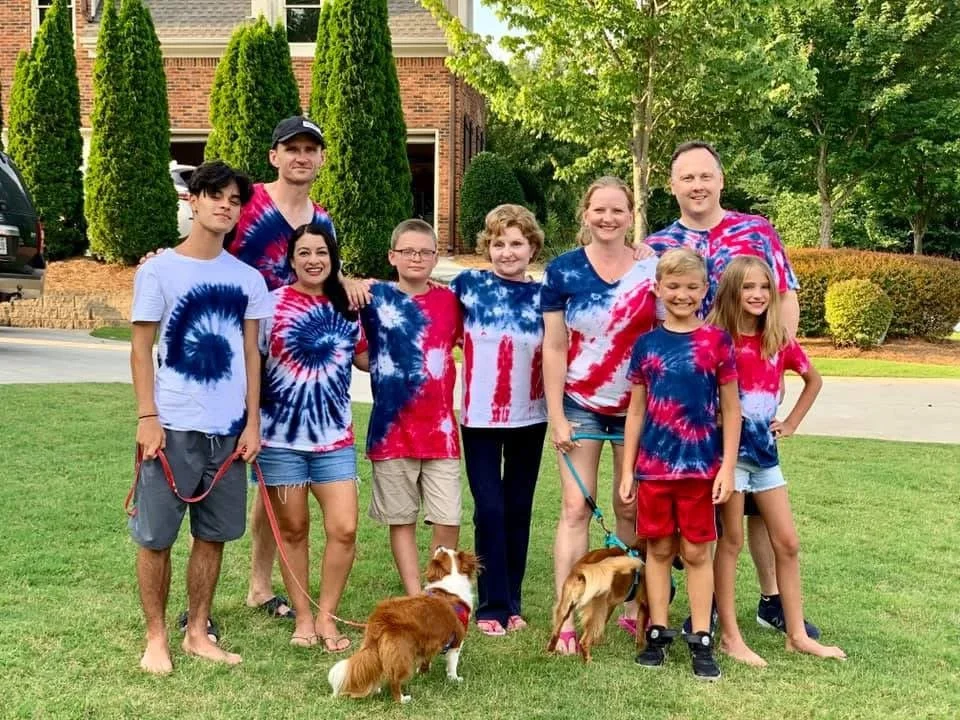
Heather’s family.
For Anyone Walking This Road
If you’re in the middle of a medical mystery…
if you’re carrying the weight of caregiving…
if you’re waiting for answers that may or may not come—
I see you.
Hope doesn’t always look like healing.
Sometimes it looks like a tie-dye shirt on the Fourth of July.
A painted flamingo.
A beach view from a balcony.
A room full of family, showing up.
Sometimes hope looks like staying.
For more support and connection, explore our Caregiver ConnectUp meetings at a space to share experiences and connect with others who understand.
For more information about porphyria, visit the About Porphyria section of our website or contact us at info@porphyria.org. We are here to support you every step of the way.
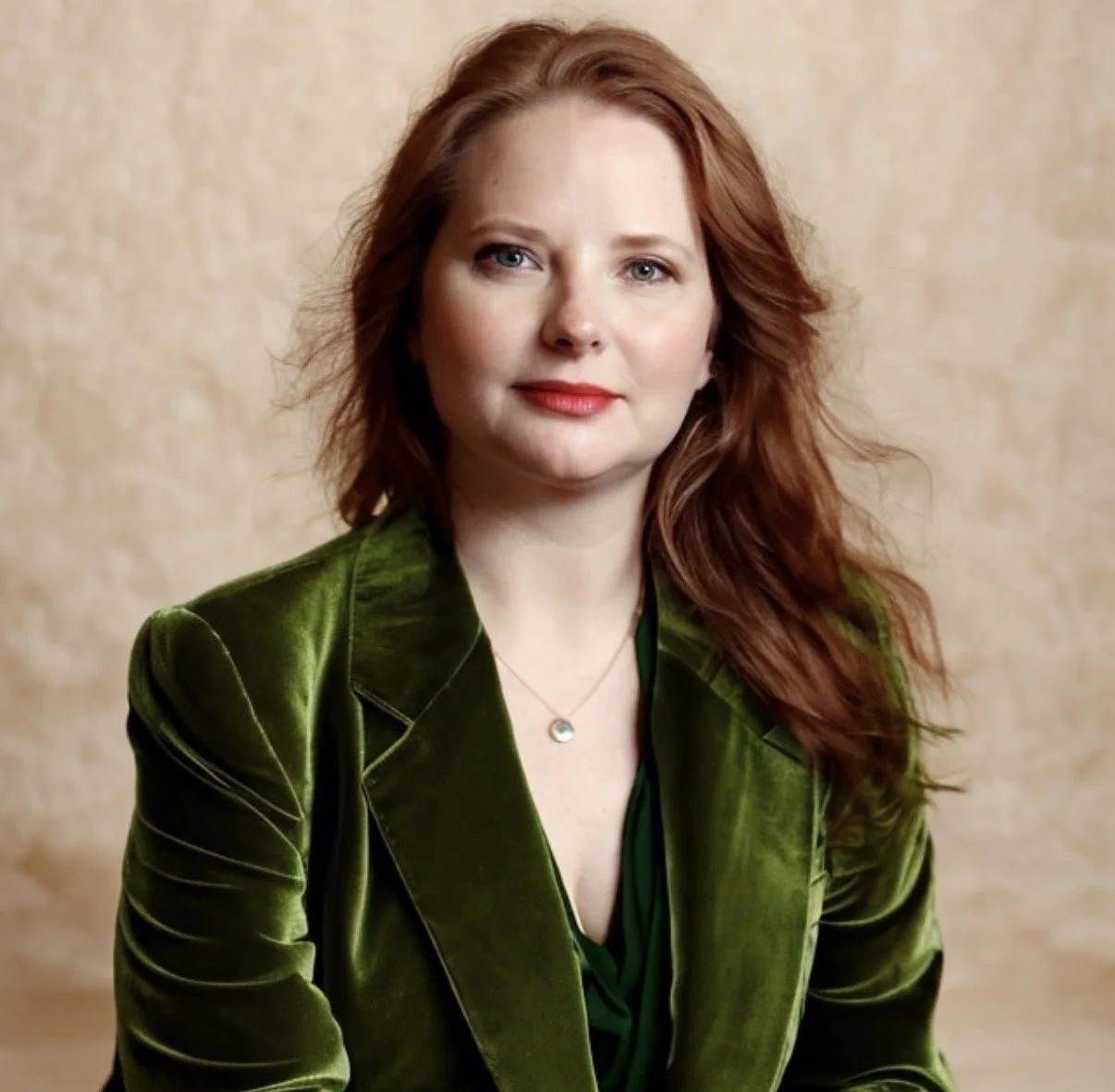
Heather Doyle is a journalist and caregiver who writes about chronic illness, rare disease experiences, and the intersection of family, advocacy, and storytelling. She is currently working on a book exploring her mother’s medical journey and the lessons learned through caregiving, while sharing snippets and stories on social media.
Have knowledge or experiences to share with Porphyria Voices?
Reach out and pitch your idea—we’d love to feature your unique perspective!
More Porphyria Voices