Meet Milton, ADP Warrior
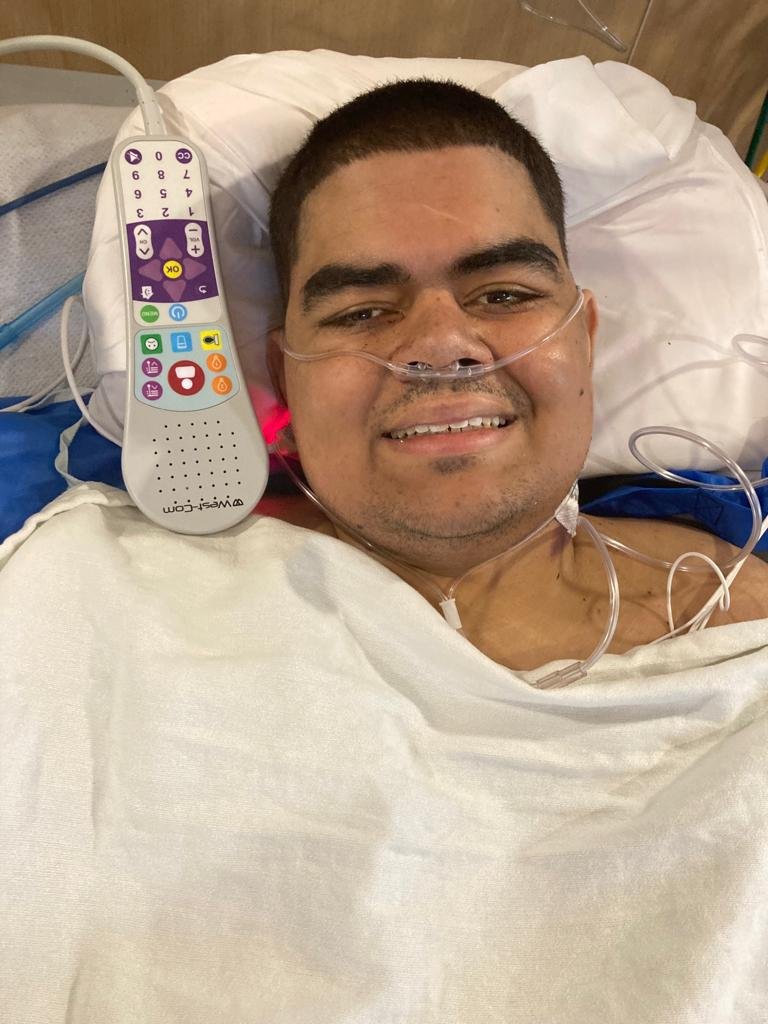
“I remember feeling a lot of pain while looking for anyone to tell me what was going on.”
Milton, ADP patient.
My name is Milton Eduardo Cubas and I am 29 years old. Sports and physical activities with others are two of my favorite things. My current studies at Miami Dade College are to become a math teacher.
I had my first porphyria attack on a very hot summer day in 2000 at a castle in Cartagena, Colombia named Castillo San Felipe de Barajas. I was with family members and I remember feeling fatigued while taking a tour of the castle. I drank a whole bottle of water after leaving. Once I got in a taxi, I felt nauseous. I was tired. We stopped to eat something, but I vomited until nothing would come out. I went to hospitals in Colombia and they couldn’t find anything.
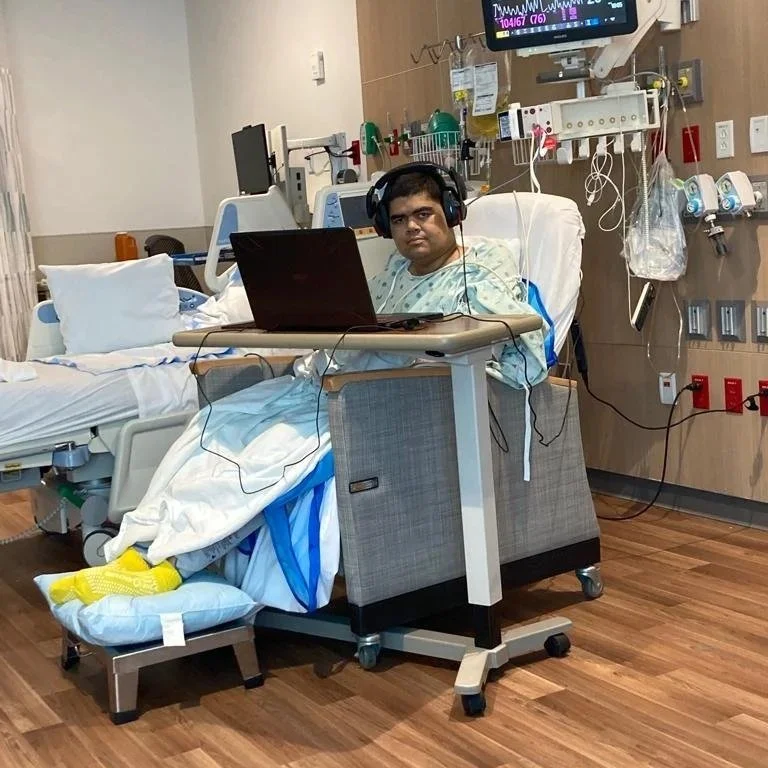
Milton at the hospital.
I remember feeling a lot of pain while trying to find someone who could tell me what was going on. I had to cut my trip to Colombia short because we couldn’t find anyone to help me and my pain was getting worse.
I went to Miami Children’s Hospital and my attack got better, but the doctors still couldn’t find anything. I would have an attack every month or two for a year until a doctor named Elsa Vasconsuelos told me that I may have porphyria. Soon after that, my dad found Dr. Anderson.
I took two or three trips to Galveston, Texas before Dr. Anderson diagnosed me in February 2003 with aminolevulinic acid dehydratase-deficient porphyria, which is abbreviated as ADP.
Throughout my teenage years I had attacks nearly every month. Once I hit my 20s, the attacks spread out more. The longest I went without an attack is two and a half years, but that was followed by three attacks really close to each other that affected my neuropathy a lot. My last attack was mid-July of 2017.
I would get hematin every single Friday in an infusion center. I tried spacing out the hematin to every 10 or 14 days, but with that spacing I would still have attacks. During an attack, I would have to be hospitalized to get hematin for four days, every day.
Some of my negative experiences are that some nurses don’t know how to administer the hematin the correct way when I’m hospitalized. The neuropathy has affected me every day, from dressing myself to doing homework. I have trouble extending my fingers, which stops me from doing hand gestures. I have foot drop where I could lose my balance easily. It has forced me to try to find anywhere where there is AC. I can last longer in the sun now, but in the summer I can’t.
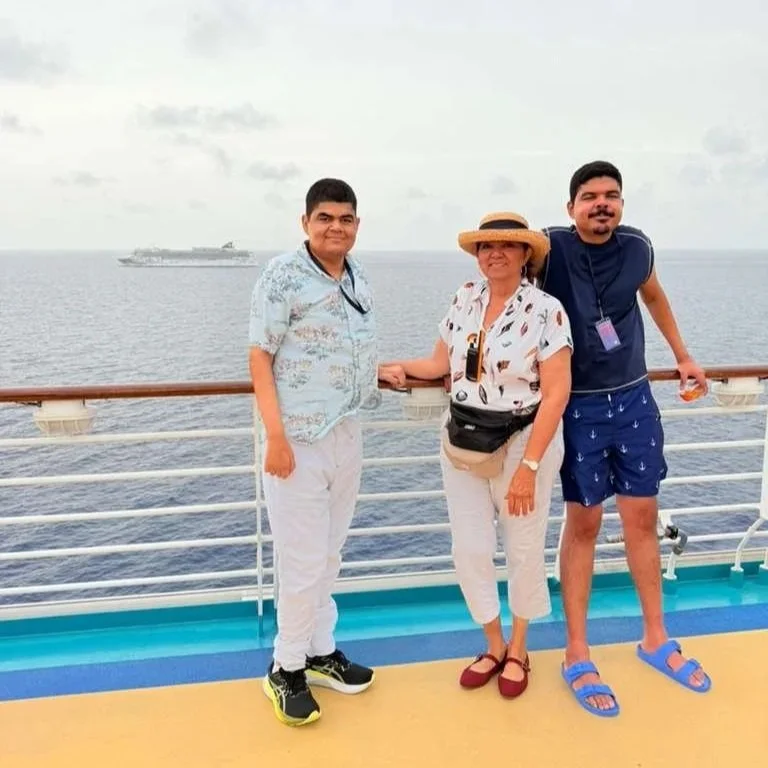
Milton and his family.
There have been positive experiences, too. I have met a lot of wonderful people, nurses and doctors, who have helped me when I’m trying to get better. My family has supported me and helped me whenever I couldn’t drive or when I was hospitalized.
“For the people who have porphyria: Knowledge is Power. The more you know about porphyria, the stronger you will be.”
In a life-changing moment, I received a liver transplant after my family learned more about my condition and found a matching donor within our family. The process required urgent coordination to bring me back to Miami for the procedure, where I underwent the transplant.
Today, I am feeling better and continue moving forward with my life, supported by my family, my medical team, and the knowledge I have gained throughout my journey. I want to become a math teacher and I am studying really hard to graduate. I want to get my hands better.
For the people who have porphyria: Knowledge is Power. The more you know about porphyria, the stronger you will be. It is also important to participate in research, and I am in the longitudinal study at UTMB.
Milton’s story with ADP.
Want to share your story? Contact us at katri@porphyria.org
Meet others living with porphyria